Ride with confidence. Come home every time.
Master the skills, habits, and mindset that keep riders alive — whether you're picking up your first bike or shaking off rust after years away.
"I'm not here to scare you off the bike — I'm here to make sure the road never catches you off guard."
— Lorraine Neal
What you'll learn
What you'll be able to do
- Identify and avoid the 10 most common pre-crash scenarios before they unfold
- Execute emergency braking and swerving techniques with confidence and muscle memory
- Build a personal protective gear strategy matched to your riding style and risk level
- Read traffic, road surfaces, and environmental hazards like an experienced professional
- Develop a consistent pre-ride mental checklist that becomes second nature
- Ride defensively in high-risk environments — intersections, highways, night, and wet roads
How it works
A school that adapts to you
This isn't a set of static videos. Every lesson is generated live and tuned to where you actually are.
We learn your level
A quick placement check tailors your starting point so you're never bored or lost.
Lessons adapt as you go
Each lesson is written for your pace and your goal, adjusting as your skills grow.
Your AI coach keeps you moving
Checkpoints, feedback, and gentle nudges turn progress into a real result.
The curriculum
What's inside your school
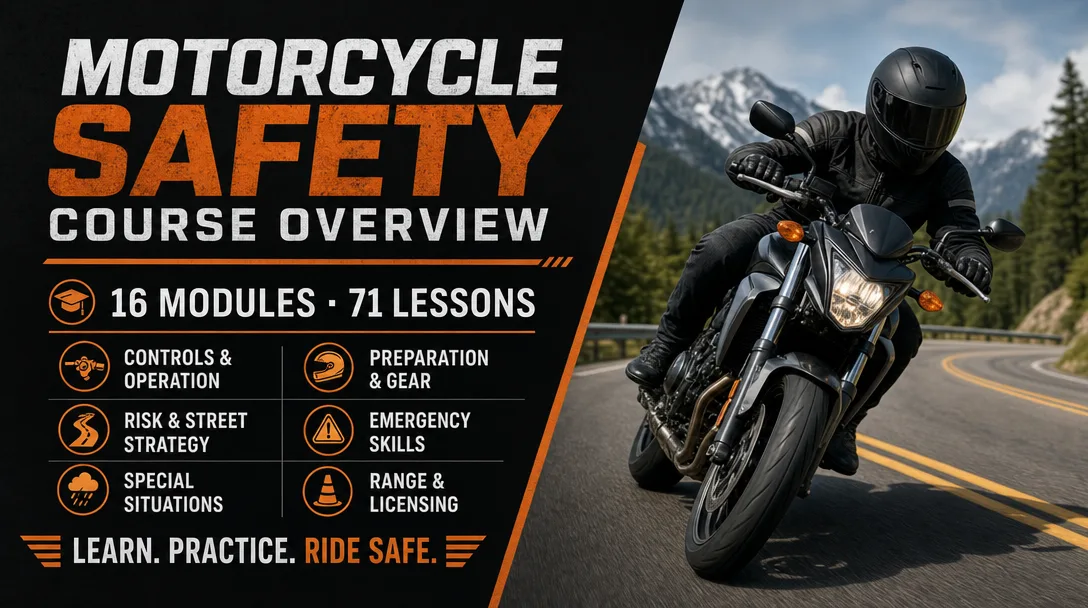
16 modules · 71 lessons
Course Introduction
Welcome to the course. This opening module sets the stage for everything ahead: what the Basic RiderCourse expects of you, how the lessons and range work fit together, and the mindset of a responsible rider. You'll learn what's required to complete the course successfully and begin building an honest understanding of the risks of riding and the personal responsibility every rider accepts when they take to the road.
- 1.1Course RequirementsIncluded
- 1.2Risk and ResponsibilitiesIncluded
Motorcycle Types
Not all motorcycles are built for the same purpose, and choosing the right type matters for both safety and enjoyment. This module surveys the main categories of motorcycles — street, dual-purpose, and off-highway — and how their design, handling, and intended use differ. Understanding these distinctions helps you match a machine to the kind of riding you plan to do.
- 2.1Street MotorcyclesIncluded
- 2.2Dual-Purpose MotorcyclesIncluded
- 2.3Off-Highway MotorcyclesIncluded
Controls, Indicators and Equipment
Before you can operate a motorcycle confidently, you need to know what every control does and where it is. This module introduces the primary controls you'll use constantly, the secondary controls that support them, and the indicators and equipment that keep you informed and legal on the road. Becoming familiar with these now makes your first rides far smoother and safer.
- 3.1Primary ControlsIncluded
- 3.2Other ControlsIncluded
- 3.3Indicators and EquipmentIncluded
About Basic Operation
This module covers the fundamental skills of operating a motorcycle. You'll learn how to start and stop the engine, find and use the friction zone of the clutch, hold a proper riding posture, make basic turns, brake smoothly to a stop, and shift gears. These are the building blocks that every other riding skill depends on, and mastering them is the heart of becoming a rider.
- 4.1Engine Start and StopIncluded
- 4.2Clutch Lever and Friction ZoneIncluded
- 4.3Riding PostureIncluded
- 4.4Basic TurningIncluded
- 4.5Braking to a StopIncluded
- 4.6ShiftingIncluded
Preparing to Ride: The Four Preps
Safe riding begins before you ever start the engine. This module covers the four preparations every rider should make: ensuring the motorcycle fits you, inspecting and maintaining it, wearing proper protective gear, and bringing the right mental attitude. Together these four preps set you up for a safer, more confident ride.
- 5.1Motorcycle FitIncluded
- 5.2Motorcycle Inspection and MaintenanceIncluded
- 5.3Personal Protective GearIncluded
- 5.4Mental AttitudeIncluded
Risk and Riding
Riding always involves risk, but skilled riders learn to understand and manage it rather than ignore it. This module explores how to become aware of risk, decide how much risk you're willing to accept, take active steps to reduce it, and honestly assess your own abilities. Managing risk well is what separates safe, lasting riders from the rest.
- 6.1Risk AwarenessIncluded
- 6.2Risk AcceptanceIncluded
- 6.3Risk ManagementIncluded
- 6.4Self-AwarenessIncluded
Basic Street Strategies
Riding safely in traffic is about strategy as much as skill. This module introduces the core street strategies that keep you out of trouble: choosing the best lane position, making yourself visible to other drivers, riding with an active plan, processing what you see, and always keeping an escape path open. These habits help you stay one step ahead of the hazards around you.
- 7.1PositioningIncluded
- 7.2Being VisibleIncluded
- 7.3An Active StrategyIncluded
- 7.4Mental ProcessingIncluded
- 7.5Escape PathsIncluded
Strategies for Common Riding Situations
Everyday riding presents a wide variety of situations, each with its own challenges. This module works through the most common ones — from intersections and lane changes to curves, hills, parking, passing, night riding, and group riding — and gives you a practical strategy for handling each safely. Mastering these situations builds the real-world judgment that keeps you out of trouble.
- 8.1IntersectionsIncluded
- 8.2Between IntersectionsIncluded
- 8.3Blind SpotsIncluded
- 8.4Lane ChangesIncluded
- 8.5Freeway Merging and ExitingIncluded
- 8.6CurvesIncluded
- 8.7Limited-Space ManeuversIncluded
- 8.8Starting on a HillIncluded
- 8.9ObstaclesIncluded
- 8.10ParkingIncluded
- 8.11Road FurnitureIncluded
- 8.12PassingIncluded
- 8.13TailgatersIncluded
- 8.14Night RidingIncluded
- 8.15Group RidingIncluded
Basics for Emergencies
When something goes wrong, your reaction in the first second matters most. This module covers the emergency skills every rider should have ready: how braking systems work, stopping quickly in a straight line and in a curve, recovering from front and rear tire skids, swerving around a hazard, and deciding whether to brake or swerve. Practicing these responses builds the reflexes that can prevent a crash.
- 9.1Braking SystemsIncluded
- 9.2Emergency Stop in a Straight LineIncluded
- 9.3Emergency Stop in a CurveIncluded
- 9.4Front Tire SkidIncluded
- 9.5Rear Tire SkidIncluded
- 9.6SwervingIncluded
- 9.7The Brake or Swerve DecisionIncluded
Special Riding Situations
Beyond everyday traffic, riders face special situations that call for extra skill and preparation. This module covers riding on varied road surfaces, carrying passengers or cargo, planning longer touring trips, managing wind, reacting to animals, and handling mechanical or emergency issues on the road. Knowing how to approach each one keeps you safe when conditions are out of the ordinary.
- 10.1Road SurfacesIncluded
- 10.2Carrying Passengers or CargoIncluded
- 10.3TouringIncluded
- 10.4WindIncluded
- 10.5AnimalsIncluded
- 10.6Maintenance and Emergency IssuesIncluded
Rider Impairments
Impairment is a leading factor in serious motorcycle crashes. This module examines the things that reduce a rider's ability to ride safely — alcohol, drugs, and other factors like fatigue and emotion — and how to recognize impairment in yourself and others. It also covers intervention: how to help prevent an impaired person from riding. The safest choice is always to ride unimpaired.
- 11.1AlcoholIncluded
- 11.2DrugsIncluded
- 11.3InterventionIncluded
- 11.4Other Factors Affecting SafetyIncluded
Select Topics
This module gathers important practical topics that every rider should understand before heading out on their own. It covers how to get licensed, the protective gear and equipment that may be required, insurance considerations, and the legal consequences of riding impaired. Because many of these rules vary by location, the goal is to know what to check and where to find the requirements that apply to you.
- 12.1Licensing InformationIncluded
- 12.2Personal Protective Gear RequirementsIncluded
- 12.3State Motorcycle Equipment RequirementsIncluded
- 12.4State Insurance RequirementsIncluded
- 12.5Consequences for Impaired RidingIncluded
Key Safety Concepts
As the course draws to a close, this module pulls together the most important ideas into a lasting framework. You'll honestly assess your own readiness to ride and review the key terms and concepts from the course so they stay with you. These takeaways form the core safety mindset you'll carry into every ride.
- 13.1Self-AssessmentIncluded
- 13.2Terms and Concepts from the CourseIncluded
Knowledge Test
The knowledge test checks that you've absorbed the key information from the course before you move to the riding evaluation. This module helps you prepare — reviewing what the test covers, how it's structured, and the main topics to focus on — so you can demonstrate your understanding with confidence.
- 14.1Preparing for the Knowledge TestIncluded
Next Steps
Completing the course is the beginning, not the end, of your development as a rider. This module looks at what comes next — finishing your licensing, gaining experience gradually, continuing to practice, and pursuing further training — so you keep building skill and confidence well beyond your first rides.
- 15.1Continuing Your DevelopmentIncluded
Range Preparation
Before you ride on the practice range, you need to know how it works and how to stay safe on it. This module covers the range safety rules everyone must follow, the hand signals your RiderCoach uses to communicate, and how the riding exercises are organized. Understanding these things ahead of time helps the on-bike sessions run smoothly and safely.
- 16.1Range Safety RulesIncluded
- 16.2RiderCoach SignalsIncluded
- 16.3How the Range Exercises WorkIncluded
Who it's for
Is this you?

First-time riders
Just got their license and want to build real-world safety knowledge before racking up miles.

Daily commuters
Rides through city traffic every day and wants sharper hazard perception to handle unpredictable drivers.

Returning riders
Took years off and is getting back in the saddle — wants a confidence reset before hitting the open road.

Protective parents
Their teenager just got a motorcycle and they want their kid to have every safety advantage possible.
Weekend tourers
Loves long weekend rides and wants to handle mountain roads, weather, and fatigue without fear.
Close-call survivors
Had a scare recently and is determined to understand what happened and make sure it never happens again.
Questions
Frequently asked
Your teacher
A note from your teacher

Lorraine Neal
I know exactly where you are right now.
Maybe you just bought your first bike and the excitement is real — but so is a quiet voice in the back of your head wondering if you're truly ready for what's out there on the road. Or maybe you've been riding for years, you've had a close call or two, and you've started to wonder whether luck has been doing more work than skill.
That's the gap I built this school to close.
I've spent years studying how and why riders get hurt — not from a textbook, but from the kind of deep obsession that comes from caring about this community. What I found was both sobering and genuinely hopeful: the vast majority of motorcycle crashes are preventable. Not by riding less. Not by being timid. But by knowing exactly what to look for and how to respond when things go wrong fast.
The problem is that most of us learned to ride from a friend, a basic licensing course, or trial and error. None of those sources give you a complete, systematic picture of crash causation, hazard perception, or the emergency techniques that work under real adrenaline. So riders go years — sometimes whole lifetimes — one bad moment away from an outcome they never saw coming.
This course is what I wish had existed when I started riding. It's practical, it's direct, and it respects your intelligence. I won't scare you into parking your bike. I'll give you the knowledge and the frameworks to ride with genuine confidence — the kind that's earned, not assumed.
Come ride smarter with me. The road isn't going anywhere.
— Lorraine Neal
Start your journey today
Join 2 others and get instant access — learn at your own pace with an AI coach in your corner.
$5/mo
Recurring billing · cancel anytime
Secure checkout · Instant access
- 16 modules, 71 lessons
- AI-adaptive lessons tuned to your level
- Quizzes & checkpoints to lock in progress
- Your own AI learning coach
- Learn on any device, at your pace
- Full access for as long as you're subscribed